
The Safety Premium
Why the Gulf's loss is your boutique's biggest risk
The global luxury map has just been redrawn.
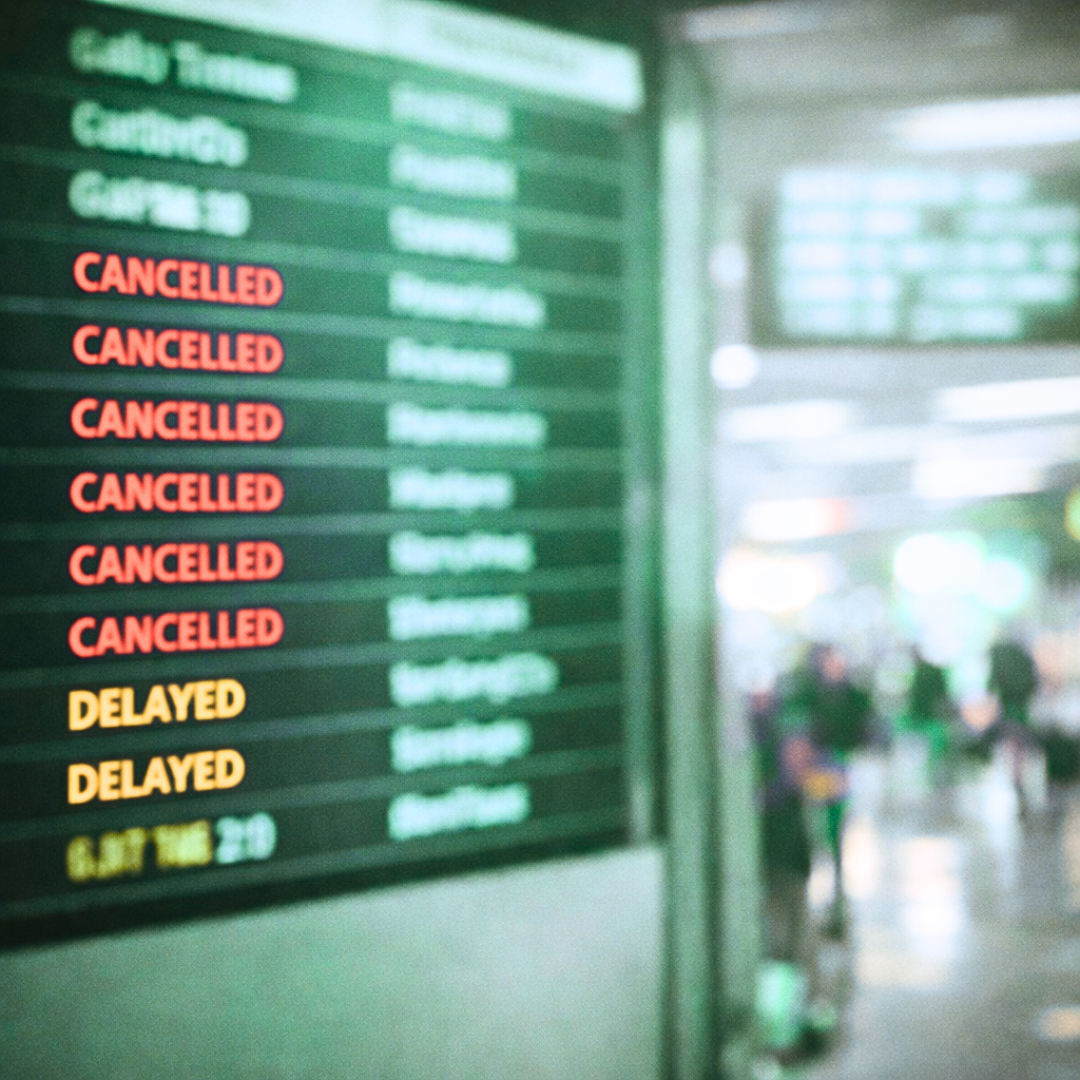
For the last decade, the hospitality industry built its long-haul logic around the assumption that the world would forever funnel through Dubai, Doha, and Abu Dhabi. That assumption collapsed in the space of a week. In the last five or so weeks, airspace closures and conflict-driven suspensions grounded more than 20,000 flights across Gulf hubs, and Dubai hotel bookings dropped 60% within 48 hours of the Iran conflict escalating. The WTTC estimates the Gulf region is now losing around $600 million in visitor spending every day the disruption continues.
For independent boutique hotels in Southern Europe, the Mediterranean, and other "safe" corridors, this looks like a windfall. Bookings are up. ADR is climbing. Reports suggest Gulf tourism could see a $34–56 billion reduction in visitor spending in 2026 alone, and Southern Europe is one of the biggest beneficiaries. Greece, Spain, Italy, and Portugal are absorbing demand that used to route through the Gulf.
If you are running one of those properties, there is something worth saying clearly before the champagne gets opened.
You are not yet winning on merit, you are simply seeing increased bookings because you are not in a war zone.
This is accidental occupancy, and it is one of the more dangerous things that can happen to a small hotel. Because accidental occupancy hides every operational flaw you have, and it does so at exactly the moment you stop looking for them.
The reallocation, briefly
The numbers tell a clear story. Gulf hubs handled roughly 40% of Asia-Europe connecting traffic before the suspensions. That corridor is now effectively closed through at least Q2 2026, with major carriers including Lufthansa Group, British Airways, Cathay Pacific, and Singapore Airlines cancelling services to Dubai, Doha, and Tel Aviv. Rerouting via Istanbul or direct Pacific crossings is adding six to twelve hours to typical journeys and $200 to $500 to fares.
Two behavioural shifts matter most for independent hotels.
Lead times have collapsed. Travellers are no longer planning six months out. They are reacting, rebooking, and looking for somewhere that feels reliable right now.
The "safety premium" is real. Guests paying more to get somewhere stable expect the destination to justify the inconvenience. They are not feeling forgiving. They are comparing.
The trap most boutiques are walking into
When demand arrives without effort, the temptation is to raise rates to match the moment and keep everything else the same. This is exactly how independent hotels squander windfalls.
Most boutiques will raise their rates to match the safety premium without raising their standards. They will charge five-star prices for a three-star operational reality, and the guests paying those rates will remember. Not in a formal complaint. In a quiet decision not to come back, and a quieter one not to recommend you.
Here is the uncomfortable part: The travellers arriving at your property this spring were not choosing you. They were avoiding somewhere else. When the world stabilises (which it hopefully will, soon), they will ask themselves one question: was I here because I had to be, or because I wanted to be?
If the booking journey was clunky, the breakfast felt like a negotiation, the Wi-Fi login was from 2014, and the check-in felt transactional, they already know the answer.
How to turn a windfall into a moat
The opportunity here is not the guest you have this month. It is the guest you deserve to keep next year. Three practical moves.
Fix the unseen operational failures while the cash is flowing. This is the moment to address the friction points you have been meaning to fix for eighteen months. Slow laundry turnaround. A clunky Wi-Fi onboarding flow. A booking confirmation email that reads like a receipt. A check-in process that starts with a form rather than a greeting. None of this requires capital. All of it requires attention. Luxury in 2026 is the absence of friction, and the absence of friction is built, not bought.
Make the direct channel the best channel. Do not let the OTAs skim the safety premium off the top. Position direct booking not as a discount, but as a better version of the stay. The late check-out. The preferred room. The welcome drink that is actually a welcome. The quiet upgrade. Guests paying a premium to get somewhere stable want to feel like they found a sanctuary, not a room on a platform.
Turn the property into a gateway. Travellers are increasingly looking for meaning rather than memory-making. If your hotel is a place to sleep between flights, you are a commodity. If you are the introduction to a local winemaker, a quiet gallery, a walk most guests would never find alone, you are an asset they remember and recommend to the next person asking where to go.
The point
The war has created a vacuum, and the non-Gulf world is filling it. But "safe" is not a positioning. It is a temporary accident of geography, and it expires the moment the news cycle moves on.
The independent hotels that come out of 2026 stronger will not be the ones that rode the wave. They will be the ones that used the wave to fix what they had been ignoring. Quietly, without fanfare, while their competitors were busy congratulating themselves on a good quarter.
Small hinges, big doors. The windfall is the hinge. What you do with it is the door.
