
South Asia’s Tourism Rebound: Where It’s Moving
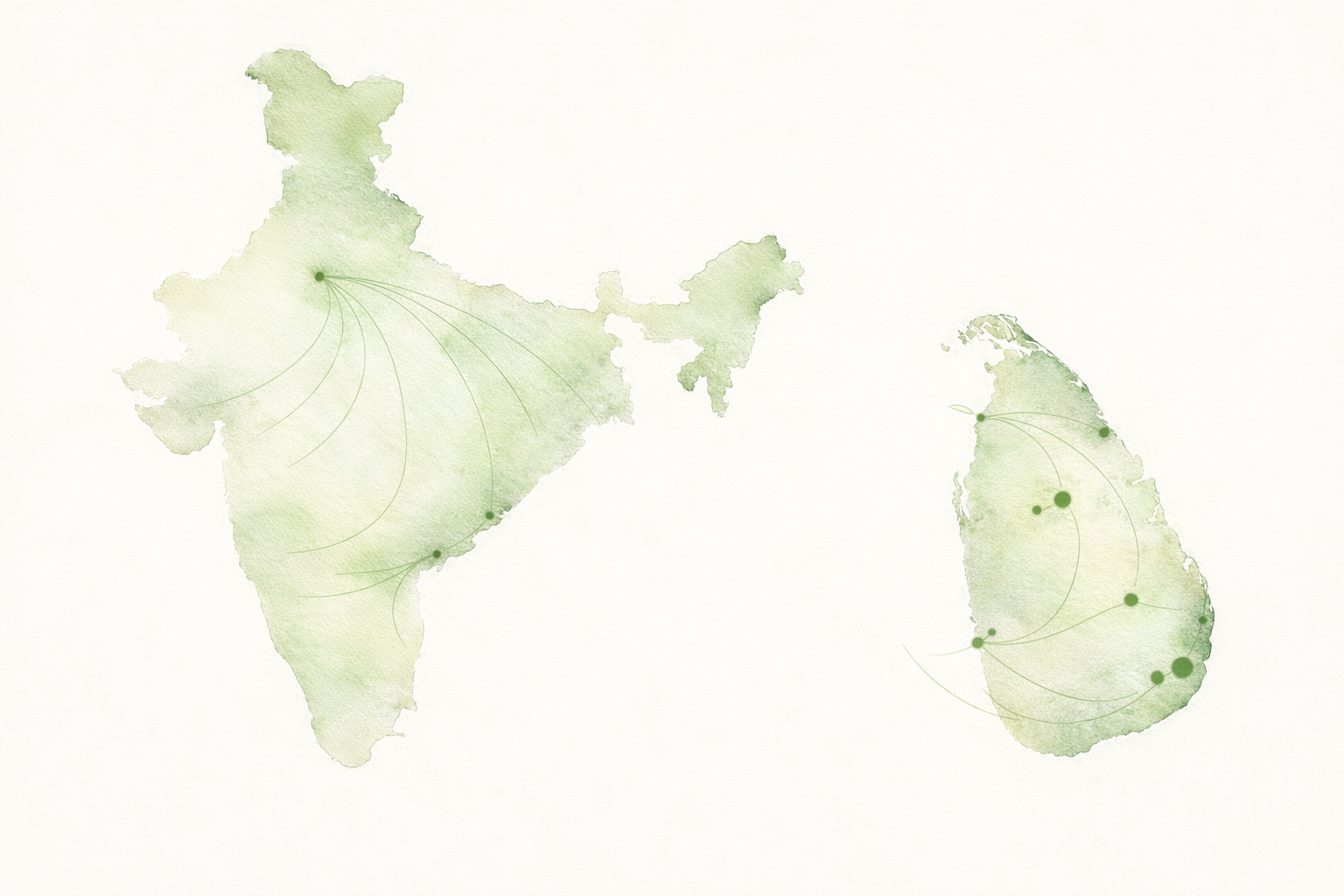
Post-pandemic tourism is dispersing. So is the opportunity.
Across India and Sri Lanka, demand has returned with a slightly different shape. Travel is spreading out, increasingly led by experience and intent rather than convenience, and you can see it in how quickly guests are extending trips beyond the main entry points.
For independent and boutique hotels, that matters. Not because growth is guaranteed, but because dispersion creates pockets of demand where quality, clarity, and consistency can outpace scale.
There is upside on the table beyond what many owners assume. And yet, there is also more competition than the raw arrival numbers suggest.
Both can be true at once.
The numbers that quietly change the mood
A few data points do most of the heavy lifting here.
India’s domestic travel engine is enormous and accelerating.
In 2023, India recorded 2.51 billion domestic tourist visits, up 44.98% year on year. That is not a typo. It is visits, not unique people, but the signal is still clear: the domestic market is not just “back”. It is powering growth at volume.
International arrivals are still rebuilding, but value has recovered faster.
In 2024, India recorded roughly 9.66 million foreign tourist arrivals. Still below the pre-pandemic peak, but paired with a stronger spend picture. Tourism foreign exchange earnings were around US$33.2bn in 2024, up meaningfully versus 2023, and slightly ahead of 2019 in US dollar terms. The mix is shifting toward higher-value trips, not just higher headcount.
Sri Lanka’s rebound has been steep.
Arrivals climbed from roughly 720k (2022) to 1.49m (2023), and then to 2.05m (2024). Receipts reached about US$3.17bn in 2024. Average length of stay was 8.42 nights, and reported average daily spend was around US$181.
Those last two numbers matter. Longer stays and decent daily spend are the kind of inputs that make boutique hotels viable, even when inventory grows.
What we are actually seeing: travel is spreading
The more interesting story is not just “tourism is back”: it is where it is going.
In India, the domestic surge pulls demand into secondary cities and circuits that were always important, but are now structurally scaled:
Heritage Rajasthan beyond “one night in Jaipur”
Spiritual and cultural travel that is no longer niche
South India circuits that blend temples, food, and slower pacing
Nature, wellness, and retreat towns that sit outside the classic metro orbit
In Sri Lanka, the shape is similar:
The south coast is functioning as a core leisure zone, not an add-on
Hill country continues to act as a stabiliser, not a detour
The cultural triangle remains a genuine high-volume engine
Early signals appear in the north and east, smaller but measurable
The pattern across both countries is consistent: travel is becoming less about ticking off the gateway and more about following a motive.
Why dispersion is happening now
A few structural shifts sit underneath the data:
1) Domestic travel has normalised as a repeatable habit.
In India especially, domestic travel looks less like an annual event and more like a lifestyle rhythm. Short breaks, family travel, weddings, wellness weekends, temple circuits, work breaks. That creates repeat demand in places that previously relied on peak seasons and long weekends alone.
2) Experience motifs are now the organising principle.
Heritage, spirituality, wellness, nature, slow travel, food. These are have gone beyond marketing themes to real decision drivers. When guests choose a place for a motive, they are also more willing to pay for their desired version of that experience.
This is where independent, boutique and heritage hotels can win, because the “right version” is rarely generic.
3) Access keeps improving.
Many international arrivals still enter through major hubs. But dispersal happens via internal flights, trains, drivers, and packaged routing. Sri Lanka’s recovery has also been supported by improving connectivity and renewed confidence in travel flows.
4) Policy friction has eased.
Visa facilitation and simplification is not glamorous, but it affects conversion. Even modest reductions in friction are influencing where travellers choose to go, and how long they stay.
Emerging clusters worth paying attention to
This is not a definitive “top destinations” list. It is a pattern map:
India
Rajasthan heritage cluster (Jaipur, Udaipur, Pushkar)
This corridor benefits from domestic breaks plus international circuit travel. The opportunity tends to sit in hotels that feel calm, coherent, and unforced, with a clear identity and a high trust signal.
Uttar Pradesh spiritual and cultural demand (including Varanasi)
High-volume domestic travel does not automatically mean low-value guests. It means segmentation is everything. The higher-value slice is often looking for quiet, considered stays adjacent to intense footfall anchors.
The winners tend to be the properties that can deliver reassurance, pacing, and service rhythm in a high-energy destination.
South India circuits (Kochi, Trivandrum, Madurai)
These are slower routes. Longer stays with multi-stop itineraries. Repeat domestic travel plus international “experience collectors”. Boutique hotels often do well here when they translate the destination into a tangible guest narrative, not just décor.
Karnataka heritage and culture (Hampi, Mysuru)
Strong domestic context, strong heritage pull. Here, the boutique advantage is often in guiding the guest through the “what do we do here?” question with confidence and ease.
Sri Lanka
South coast (Galle plus the wider Weligama, Mirissa, Ahangama belt)
This is no longer secondary. It is a main stage. Inventory has expanded and continues to expand, which makes differentiation more important than ever.
The biggest underestimation is that “being in the right place” is not enough. The south coast rewards hotels that feel intentional, consistent, and frictionless.
Hill country (Ella, Nuwara Eliya, Kandy)
The hill country remains a structural pillar because it balances the coast. Guests route through it for landscape, weather, and a different pace. Boutique hotels do well when they lean into comfort, clarity, and experience design, especially around arrival, warmth, and evening atmosphere.
Cultural triangle (Sigiriya, Dambulla, and surrounds)
The visitation volumes are strong and multi-segment. This creates opportunity for hotels that deliver a reliable, high-trust stay in a corridor where guests are moving often and making fast decisions.
North and east (including Jaffna, where data is more limited)
Smaller numbers, higher volatility. But early-stage demand exists, and the upside can be meaningful for the right operator. The risk is overbuilding ahead of sustained connectivity and consistent itineraries.
Competition is fiercer than the headline growth
Post-pandemic growth has not arrived evenly. It arrives in bursts, and it attracts fast-followers.
Owners often underestimate three things:
Perception sets price before service does.
Guests decide what you are worth before they arrive, based on the story, the photos, the reviews, and the reassurance you provide online.
Small frictions become expensive in high-choice markets.
As destinations heat up, guests do not tolerate confusion. Unclear room types, policy ambiguity, slow response times, inconsistent messaging across platforms. Each one makes the guest more price-sensitive.
Review momentum compounds.
In emerging destinations, reputation forms quickly. The hotels that feel “easy” to trust pull ahead, and the gap widens.
Closing thoughts
The opportunity is there. This growth is real. The dispersion effect is not just a narrative, it is visible in the way visitors are moving and staying.
Competition remains fierce, because owner-operators aren’t standing still. They’re adapting and professionalising quickly to capitalise on the demand.
The hotels that benefit most from this influx will not be the ones exclusively chasing volume. They will be the ones that remove friction, tighten the guest promise, and deliver a stay that feels considered at every step.
That is exactly the zone Incrementalist operates in. We help independent and boutique hotels align guest experience and commercial performance, so you can hold onto more value as demand rises, and turn increased visitation into higher revenue and better guest satisfaction.
Not with hype. With calm, practical refinements that compound over time.
Data notes
Figures referenced above are drawn from recent reporting by India’s Ministry of Tourism (domestic visits, foreign arrivals, earnings) and Sri Lanka Tourism Development Authority (arrivals, receipts, length of stay, spend), using post-2022 recovery context.
